

Company announcement
Which Brand is Best for Material Handling? A Guide from a China AGV Robot Forklift Manufacturer
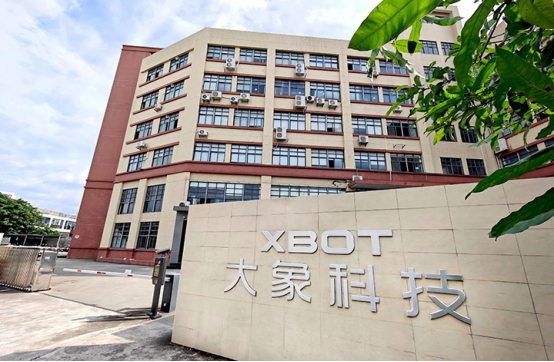
Guangzhou, Guangdong Sep 3, 2026 (Issuewire.com) - In today's fast-evolving manufacturing and warehousing landscapes, automated material handling has shifted from an optional upgrade to a core operational strategy. Global supply chains face increasing pressures from rising labor costs, floor-space constraints, and strict safety requirements. Selecting the right equipment and automation partner involves navigating a complex market filled with diverse guidance systems, load capacities, and software architectures. As an experienced China AGV Robot Forklift Manufacturer, Guangzhou Daxiang Technology Development Co., Ltd. observes that enterprise decision-makers often struggle to determine which brand or technical approach aligns most effectively with their operational goals. Evaluating material handling solutions requires a clear understanding of current industrial trends, technical navigation methodologies, and total operational requirements rather than relying solely on brand popularity.
The Global Material Handling Landscape: Key Industry Trends
The industrial sector is undergoing a profound structural transition driven by smart factory initiatives, lean manufacturing principles, and the rapid expansion of cross-border e-commerce logistics. Traditional material handling relied heavily on manual forklifts, hand trucks, and fixed conveyor belts. While functional, manual transport introduces higher risks of product damage, workplace injuries, and operational bottlenecks during peak production periods. Conveyors, on the other hand, offer high throughput but lack flexibility, permanently occupying floor space and requiring extensive capital expenditure when production lines are reconfigured.
Consequently, modern industrial facilities are increasingly adopting automated guided vehicles (AGVs) and autonomous mobile robots (AMRs). These automated systems bridge the gap between fixed infrastructure and manual flexibility. Industry data indicates a steady annual shift toward autonomous material movement across automotive, electronics, pharmaceutical, and heavy manufacturing sectors. Key drivers shaping this market include:
Demand for High Precision and Traceability: Automated handling systems integrate directly with Enterprise Resource Planning (ERP) and Warehouse Management Systems (WMS), recording every material movement in real time and eliminating manual logging errors.
Flexible Production Lines: Modern manufacturing frequently shifts between customized product batches, requiring transport systems that can adapt routes, task priority, and stop schedules without major floor reconstruction.
Enhanced Workplace Safety: Replacing human-operated lift trucks in high-traffic, narrow-aisle, or high-hazard zones significantly lowers accident rates and creates standardized, predictable material flows.
Operational Continuity and Energy Efficiency: Modern AGVs operate continuously across multi-shift patterns, utilizing automated battery management and fast-charging technologies to maximize equipment utilization rates.
Understanding Navigation Technologies: Magnetic Guidance vs. Laser SLAM
When comparing equipment brands, one of the primary technical differentiators lies in the navigation mechanism. Choosing the appropriate guidance method directly impacts installation speed, operational stability, facility modification needs, and total investment.
Magnetic Guidance Systems
Magnetic-guided AGVs rely on magnetic tape or embedded magnetic markers installed along designated floor paths. Onboard magnetic sensor arrays detect the magnetic field polarity and strength to maintain precise trajectory alignment along the route.
Technical Characteristics: Highly reliable, immune to ambient lighting changes, dust, optical glare, or visual obstacles, and cost-effective to deploy. They offer tight stopping accuracy (typically within ±20 mm), making them well-suited for predictable, high-frequency transport routes such as feeding raw materials to assembly stations, wave soldering lines, or moving finished goods to packing areas.
Operational Considerations: Route modifications require physical repositioning of the magnetic tape on the factory floor. Therefore, this technology is ideal for structured, highly repetitive workflows where transport paths remain consistent over long production cycles.
Laser SLAM Navigation Systems
Laser-guided Autonomous Mobile Robots (AMRs) utilize Simultaneous Localization and Mapping (SLAM) technology. Onboard LiDAR scanners map the surrounding physical environment in real time, comparing live point-cloud sensor data against stored facility maps to determine position and navigate autonomously.
Technical Characteristics: Complete infrastructure-free navigation. Laser AMRs require no floor modifications, tape, or external optical reflectors. If an obstacle blocks a primary pathway, advanced dynamic path-planning algorithms calculate an alternative route around the blockage without human intervention.
Operational Considerations: Requires stable mapping reference points in the facility environment and involves higher initial hardware costs compared to basic magnetic units. However, for dynamic, fast-changing warehouse environments with frequent layout alterations, laser SLAM provides unmatched operational adaptability.
Key Criteria for Evaluating Material Handling Equipment Manufacturers
Selecting a long-term automation partner involves more than purchasing individual vehicles. Decision-makers must evaluate hardware durability, software intelligence, safety engineering, and vendor customization capabilities across several core dimensions.
Payload Capacity and Chassis Design
Facilities handle a vast array of materials, from lightweight electronic component trays weighing under 50 kilograms to heavy steel coils, battery packs, or multi-ton pallets. A comprehensive equipment provider must offer versatile chassis configurations, including:
Submersible Handling Robots: Low-profile units designed to tunnel beneath cart structures, engage automated traction pins, and transport materials underneath existing trolley systems without increasing the footprint.
AGV Robot Forklifts: Automated lift trucks designed for vertical racking, pallet stacking, counterbalance loads, and high-density storage access without requiring manual drivers.
Heavy-Duty Transport Carts: Specialized heavy-payload platforms engineered for high-capacity material transfers in heavy machinery, metallurgy, and automotive stamping facilities.
System Integration and Fleet Management Software
An automated vehicle is only as effective as the dispatching intelligence controlling it. Industrial facilities often operate dozens of mobile units simultaneously across interconnected production zones. Advanced fleet control software orchestrates traffic management, prevents deadlocks at narrow intersections, coordinates automated battery charging routines, and syncs task queues directly with factory MES (Manufacturing Execution System) and WMS platforms via wireless RS485 or Wi-Fi communications.
Safety Protocols and Component Reliability
Industrial safety standards demand multi-layered, redundant collision avoidance systems. High-reliability material handling robots incorporate multi-directional infrared sensors, optical LiDAR zone scanning, physical touch-sensitive bumpers, visual LED warning bands, and dual emergency stop circuits. Power systems are equally critical; modern industrial AGVs utilize high-safety lithium iron phosphate (LiFePO4) battery packs paired with sinusoidal wave motor drivers and brushless DC motors, providing extended operational hours, quiet movement, and efficient energy recovery during decelerations.
Engineering Capabilities and Technical Focus of Guangzhou Daxiang Technology
Guangzhou Daxiang Technology Development Co., Ltd. operates as a technology-driven enterprise deeply committed to the field of industrial handling robots. The company specializes in the research, development, production, and sales of magnetic-guided AGVs and laser-guided AMR handling robots, providing efficient and reliable intelligent material handling solutions for the global manufacturing sector.
With a strong emphasis on core control system research and proprietary hardware design, the enterprise addresses diverse industrial requirements through modular robotic architectures and flexible customization options:
Drive and Motion Control: Incorporating brushless DC hub motors and sinusoidal wave drive technology to achieve smooth acceleration, reduced mechanical wear, precise speed regulation from 0.5 to 4 km/h, and quiet operating performance.
Flexible Navigation Options: Offering both time-tested magnetic strip guidance for structured assembly loops and adaptable laser SLAM systems for dynamic material distribution, catering to varying plant budget levels and process layouts.
Advanced Safety Architecture: Equipping transport units with multi-directional infrared obstacle sensors, automatic obstacle detection tones, visual warning light bands, and onboard gyroscope calibration to ensure steady navigation across minor floor variations.
Energy Management and Charging Flexibility: Utilizing safe LiFePO4 power cells that support direct plug-in, external dock charging, and optional wireless charging modes, achieving up to 100 hours of no-load operation and extended full-load endurance.
Tailored Payload Platforms: Providing lightweight 50 kg payload units with adjustable bracket structures for electronics factories alongside high-capacity industrial platforms engineered for heavy warehouse logistics.
Practical Application Scenarios Across Industrial Sectors
Automated handling robots fulfill specialized roles depending on the operational demands of specific industrial sectors:
Electronics and PCB Manufacturing: Compact submersible AGVs transfer component racks between SMT insertion lines, wave soldering machines, and testing stations, maintaining steady material flow in clean, static-controlled environments.
Automotive and Parts Assembly: Heavy transport AGVs and automated forklift units move engine blocks, stamping dies, chassis components, and battery modules between work cells, replacing manual tugger trains and eliminating aisle congestion.
Warehousing and Logistics Fulfillment: Laser AMRs and stacker forklifts automate pallet movement from receiving docks to high-bay storage racks, accelerating order picking while optimizing vertical warehouse space utilization.
Pharmaceuticals and Food Processing: Automated units handle boxed goods and raw ingredients while maintaining strict hygienic standards and generating complete digital tracking records required for compliance.
Strategic Deployment: Matching Solutions to Operational Realities
Determining which material handling brand or technology is most suitable for a specific facility requires a structured evaluation process. Rather than seeking a standardized product, enterprise managers should conduct a thorough operational audit:
Map Routing Requirements: Identify whether material pathways are strictly static or subject to frequent changes. Static lines benefit from the cost efficiency and high stability of magnetic AGVs, whereas dynamic routes favor laser AMRs.
Evaluate Load Specifications and Transfers: Standardize payload dimensions, weight ranges, and transfer heights to determine whether tow-behind, submersible, counterbalance forklift, or platform form factors are required.
Calculate Total Cost of Ownership (TCO): Consider not only the initial capital investment, but also installation time, maintenance schedules, energy efficiency, floor space optimization, and potential facility modification expenses.
Partner with Engineering-Focused Providers: Select suppliers capable of offering tailored control configurations, secondary development support, custom mounting brackets, and reliable post-sales technical assistance.
Selecting optimal material handling automation requires balancing operational environments, payload demands, and control software capabilities. By combining robust magnetic-guided AGVs with adaptable laser-guided AMRs, modern manufacturers can build scalable, highly efficient logistics networks that lower operational overhead and boost workplace safety. To explore technical specifications, custom control options, and specialized industrial handling robot solutions, visit https://www.365agv.com/ for detailed guidance and product insights.
Media Contact
Guangzhou DaXiang Technology Development Co., Ltd.
Source :Guangzhou DaXiang Technology Development Co., Ltd.
This article was originally published by IssueWire. Read the original article here.
This announcement was published as provided by our partners. The BursaKL Newsdesk is not involved.