Second LCS faces delivery delay after first ship's handover slips
The schedules for the final three vessels are unchanged, while Turkey's Roketsan ATMACA has been chosen as the replacement missile system.
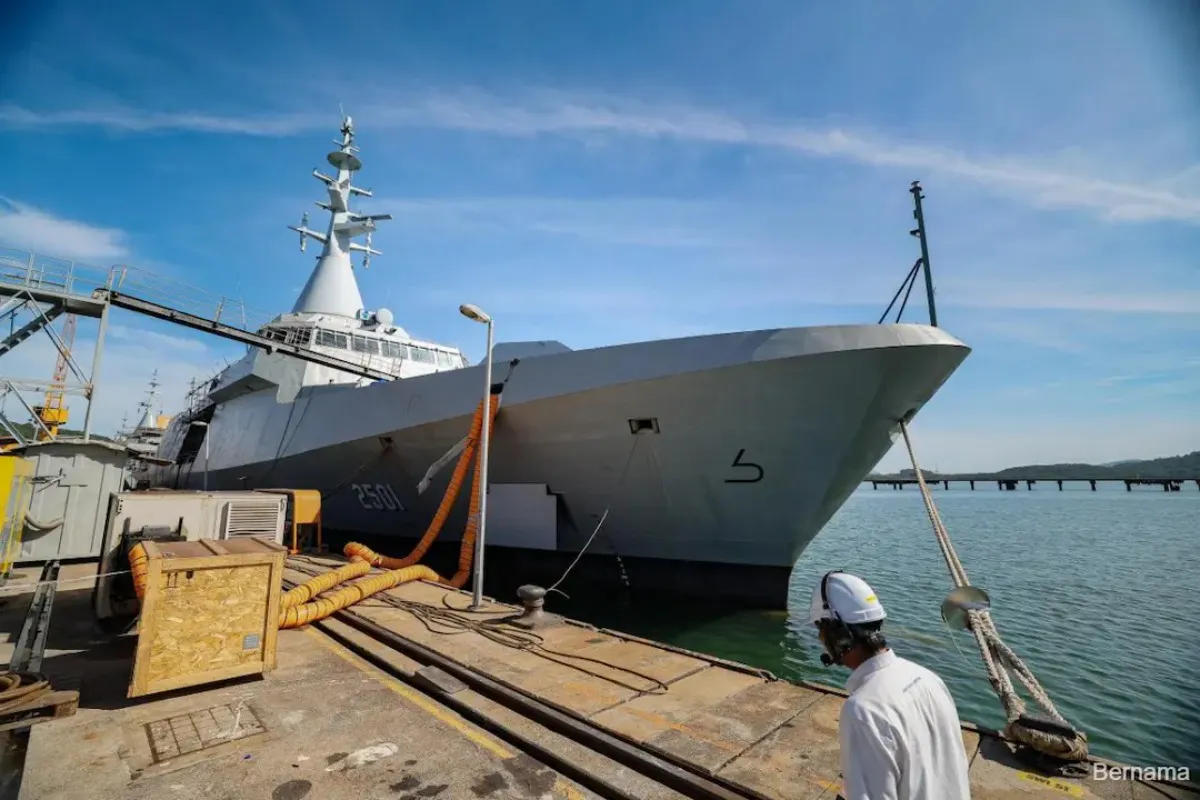
KD Raja Muda Nala, Malaysia's second Littoral Combat Ship (LCS), needs a revised handover date because the first ship's delivery has shifted to April 2027, Deputy Defence Minister Adly Zahari told the Dewan Rakyat. He said the second vessel was nevertheless expected in 2027.
Adly gave no replacement date for LCS2 during his response to the Budget 2027 debate. He said the postponement would leave the other three ships' schedules unchanged.
The timetable outlined in January by Defence Minister Datuk Seri Mohamed Khaled Nordin put the first delivery in December 2026 and the second in August 2027. Expected commissioning dates remain December 2027 for LCS3, August 2028 for LCS4 and April 2029 for LCS5.
Shipbuilder Lumut Naval Shipyard Sdn Bhd (Lunas) had cited technical, regulatory and contractual difficulties affecting the programme as reasons for the delay. Norway's withdrawal of the export licence for the planned surface-to-surface missile system also affected delivery timing.
Addressing the missile replacement, Adly said Turkey's Roketsan ATMACA was chosen to replace the Kongsberg Naval Strike Missile (NSM) from Norway. Roketsan is also working on missile development for the Littoral Mission Ship (LMS) programme, which he said was progressing on schedule.
The ministry had discussed coordinating development for both programmes. According to Adly, Roketsan indicated that development could take six months, but the work must avoid disrupting LMS and must meet the navy's LCS capability requirements.
Malaysia had decided on legal action without holding negotiations with Norway after the licence cancellation, Adly said. Although proceedings would take time, he said they were needed to defend Malaysia's financial interests and sovereign integrity.