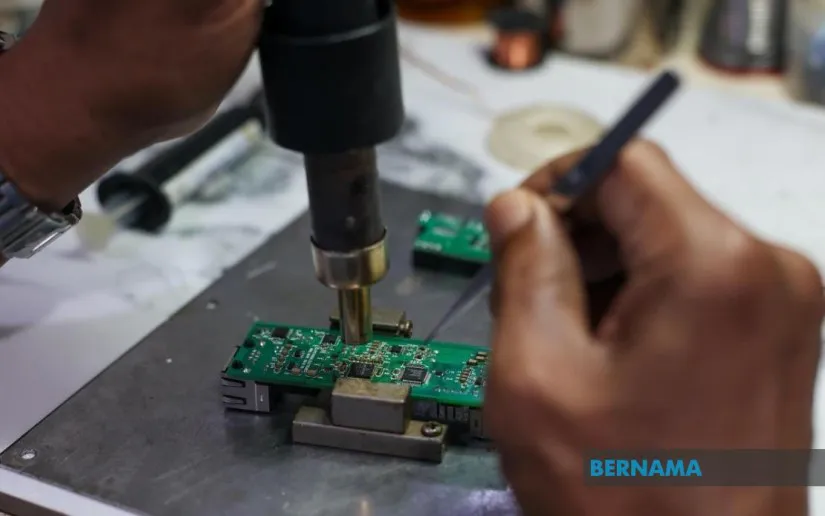
Malaysia plans broader growth and export base to reduce semiconductor dependence
The government will focus on higher-value E&E activities while exploring export destinations in Central Asia, Africa and Latin America.

Malaysia will broaden its electrical and electronics (E&E) activities, develop other growth sources and expand export markets to limit its reliance on semiconductors, Investment, Trade and Industry Minister Datuk Seri Johari Abdul Ghani said.
Speaking in the Dewan Rakyat on Oct 12, Johari said the measures were intended to make exports more resilient if the global semiconductor industry enters a cyclical downturn. He was answering Muhammad Fawwaz Mohamad Jan (PN-Permatang Pauh) on the government’s diversification strategy.
Johari said integrated circuit design and advanced packaging were among the technology-intensive, higher-value activities being prioritised under the New Industrial Master Plan 2030 (NIMP 2030) and National Semiconductor Strategy (NSS). The government will also pursue growth outside E&E and reinforce domestic supply chains.
According to the minister, 21 sectors covered by NIMP 2030, including services, contributed RM897 billion in 2025. He said the plan seeks greater economic complexity, higher-value activities and more employment opportunities.
Johari said the Ministry of Investment, Trade and Industry (Miti) was working through the Malaysia External Trade Development Corporation (Matrade) to widen export destinations, with Central Asia, Africa and Latin America among the non-traditional markets being explored.
Asked separately about higher-value exports and local technological capabilities, he said several rounds of engagement had been held with local companies.