BursaKL

Malaysian business and markets news

International

Business and economy news from other publishers, in Malaysia, the region and the world.

  1. Tech gains make difference for HK, mainland stocks

    Hong Kong and mainland stocks ended higher on Wednesday, led by tech shares, but gains were capped as investors held back from large bets ahead of the US Federal Reserve's policy decision later in the day. The benchmark Hang Seng Index rose 46 points, or 0.2 percent, to 24,713 on turnover of HK$181.09 billion. The tech index rose 34 46 points, or 0.8 percent, to 4,325 while the China enterprises index inched up by one point to 8,206. Up north, the benchmark Shanghai Composite Index rose 27 points, or up 0.71 percent, to 3,891 while the blue-chip CSI300 index advanced 0.7 percent. Both indexes snapped four straight days of losses. Gains were lifted by strength in tech shares, with the ChiNext Composite index rising 63 points, or 1.96 percent, to 3,311 and Shanghai's tech-focused Star50 index jumping 4.1 percent. The Shenzhen Component Index was 166 points, or 1.26 percent, higher at 13,454. AI is not a "monopoly of great powers" and the United States should work with China to manage risk to create a non-discriminatory development environment, China's top newspaper, the People's Daily, said in a commentary on Wednesday. In Tokyo, the Nikkei recovered from an early decline to end 438 points, or 0.69 percent, higher at 63,923 as the benchmark rose for the first time in four sessions, driven by energy producers on elevated oil prices. The broader Topix climbed 24 points, or 0.61 percent, to 4,061. In Seoul, the Kospi closed up 90 points, or 1.37 percent, at 6,717, snapping a four-session losing streak as chipmakers rebounded. US Federal Reserve chairman Kevin Warsh dislikes giving any guidance about the likely path of US interest rates, but elevated inflation, oil at more than US$100 a barrel, and his own emphasis on the need to deliver price stability and to pay attention to signals from financial market pricing appear to leave little doubt about what's next. The Fed will raise its interest rate on Wednesday and deliver at least one more hike by the end of March, a poll showed. "The key question is whether the Fed presents today's expected hike as a limited adjustment to reinforce inflation credibility or the beginning of a broader tightening cycle," analysts at Commerzbank said in a note. "A surprise hold could push front-end yields lower, but potentially lift longer-term yields if investors interpret the Fed as insufficiently hawkish on inflation, steepening the yield curve." Separately, US Treasury Secretary Scott Bessent said on Tuesday he would meet with Vice Premier He Lifeng this weekend ahead of a meeting between President Xi Jinping and his US counterpart Donald Trump next week. (Reuters/Xinhua) Edited by Tony Sabine

  2. Exchange Fund could buy more gold to boost trade

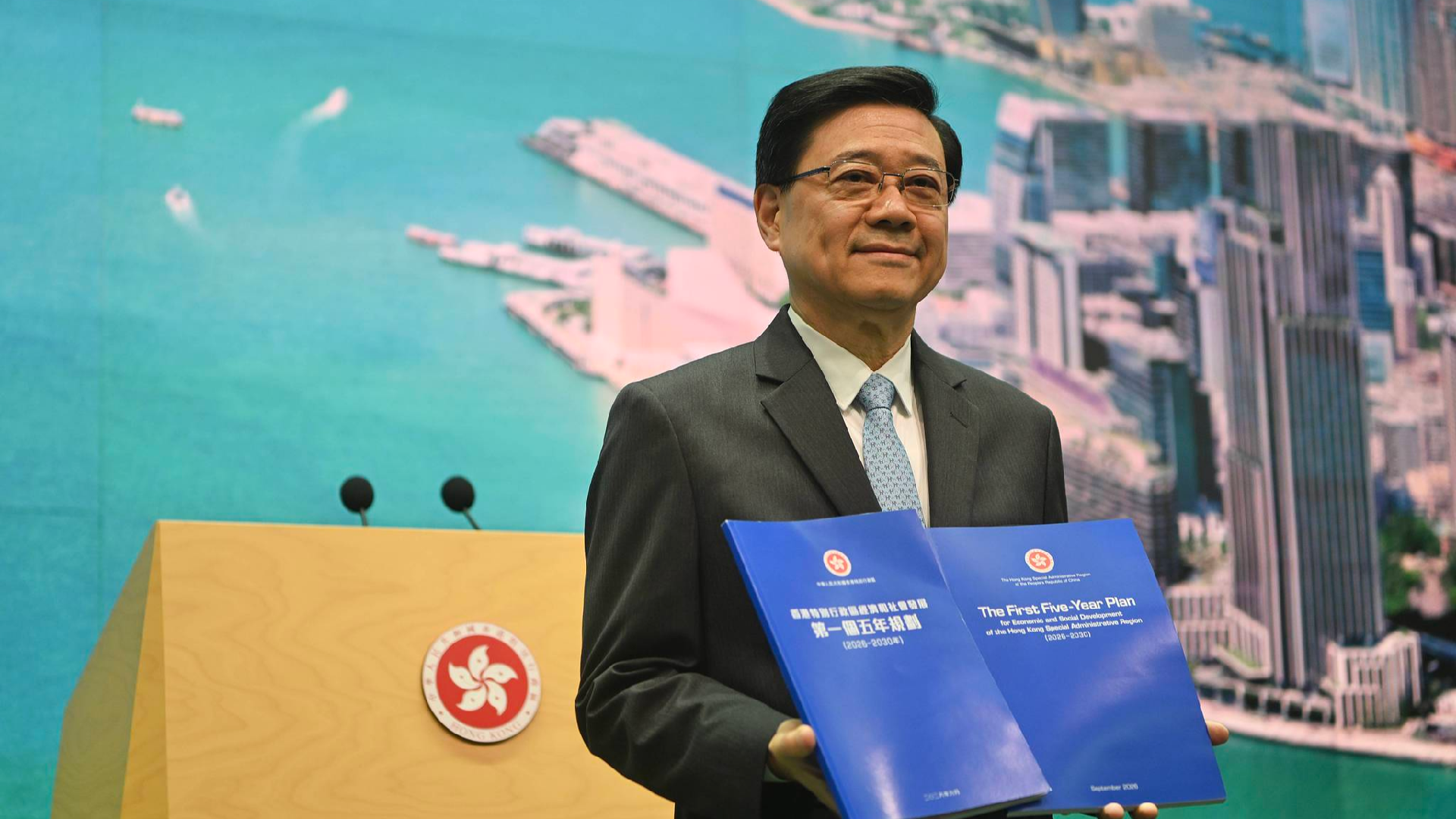
    Hong Kong is considering tapping into the Exchange Fund to buy more gold as part of efforts to boost trade in gold and transform the city into a world trading centre for the precious metal, according to Chief Executive John Lee. The fund serves as the city's de facto sovereign wealth fund and war chest to defend the Hong Kong dollar's peg to the US dollar, totalling HK$134.7 billion in the first six months of this year. In delivering his Policy Address, Lee noted that the Hong Kong Monetary Authority (HKMA), the city's de facto central bank that manages the fund, is exploring the possibility of raising the Exchange Fund's gold holdings and participating in the local spot and futures market. "It (HKMA) is also considering gradually transferring its physical gold holdings to designated vaults appointed by the Hong Kong Precious Metals Central Clearing Company Limited (PMCC)," Lee added. The PMCC is a government-owned company that previously launched a trial clearing and settlement system for gold in early July. Speaking at the Legislative Council, Lee said the gold clearing and settlement system would start its official operations in the first quarter of next year, adding that a dedicated hotline would also be set up to offer one-stop support for mainland overseas gold traders. Other measures include having the Mandatory Provident Fund (MPF) Schemes Authority, which manages local residents' pension funds, allow for a greater range of MPF investments in gold exchange-traded funds (ETFs). The government will also encourage the sector to set up an industry association for gold and host a flagship event next year, he added. On the broader commodity trading ecosystem, Lee noted the city was storing over 20,000 tonnes of metals at designated local warehouses, with total storage area exceeding 60,000 square metres. This came after the London Metal Exchange (LME) included the SAR in its global warehousing network last year, and approved 15 facilities so far to store metals, such as copper, tin, and zinc. To further transform the city into a global commodity trading hub, Lee said authorities would roll out more tax incentives to attract more traders to set up and expand their businesses in the SAR. "We will implement a half-rate tax concession for commodity trading, we will study tax concessions for gold and commodity trading, we'll foster the establishment of more accredited warehouses," he said, adding that a consultation would be launched next year. He also noted a pilot project for tokenised warehouse-receipt financing would be launched by the city's bourse operator next year. The International Organisation for Mediation (IOMed) will also be encouraged to explore the establishment of a special panel of mediators for commodity trading, he added. Edited by Tony Sabine

  3. China-ASEAN cooperation gains momentum through shared opportunities

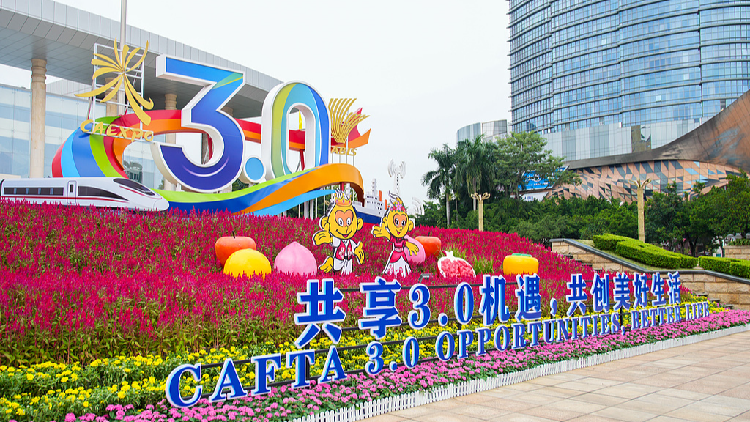
    China-ASEAN ties are deepening, with trade serving as a key driver of broader cooperation in investment, infrastructure, people-to-people exchanges and regional supply chains. The two sides have been each other's largest trading partners for several consecutive years, with bilateral trade surpassing $1 trillion for the first time in 2025.