
US Fed hikes rates for first time since 2023 as inflation stays sticky
US Fed hikes rates for first time since 2023 as inflation stays sticky

Malaysian business and markets news
Business and economy news from other publishers, in Malaysia, the region and the world.
US Fed hikes rates for first time since 2023 as inflation stays sticky
Wall Street stocks fell while the US dollar advanced on Wednesday after the Federal Reserve lifted interest rates for the first time since 2023. A rate increase had been widely anticipated, but markets judged the central bank's overall message as more hawkish than expected after a majority of Fed policymakers pencilled in at least one more rate hike before the end of 2026. All three major US stock indices finished lower, with the broad-based S&P 500 down 0.5 percent. The US dollar advanced against the euro and other major currencies, while increases in US Treasury yields indicated that the market believes from Fed Chair Kevin Warsh's commentary that "the inflation fight isn't a one-and-done rate-hike kind of thing," said Briefing.com. "The remarks have reinforced the view that today's rate hike may not be an isolated move, with investors focused on the possibility that persistent inflation pressures could require additional tightening in the months ahead." The US central bank's Federal Open Market Committee voted unanimously to raise rates to between 3.75 and 4 percent, citing "elevated" inflation and adding that the rate hike would support a "timelier return" to its two-percent target for the metric. Before the Fed's announcement, the three major US stock indexes had been gaining ground, with a chips rebound, giving the tech-heavy Nasdaq the edge. Earlier in the session, robust retail sales data suggested consumers were still spending, despite an affordability squeeze due to rising prices, particularly at the gasoline pump. The war in the Middle East expanded as Saudi warplanes pounded Yemen while Iran-backed Houthi fighters launched drones and missiles at Saudi cities in a signal of Iran's extended reach in the widening conflict. Even so, oil prices dipped after reports that Saudi Arabia was offering additional crude cargoes via Oman eased concerns about supply disruptions. Front-month WTI settled down 3.2 percent and Brent crude settled down 2.7 percent. The Dow Jones Industrial Average fell 631 points, or 1.2 percent, to 51,461, the S&P 500 lost 33 points, or 0.4 percent, to 7,552 and the Nasdaq Composite lost 3 points, or 0.01 percent, to 25,978. Tech shares were the biggest gainer among the 11 major sectors of the S&P 500, while energy, weighed down by easing crude prices, suffered the largest percentage drop, falling 3.0 percent. Chevron and Exxon Mobil fell 2.9 percent and 3.5 percent, respectively, while Devon Energy and ConocoPhillips lost more than 5 percent each. Tech got a lift as semiconductor shares advanced 0.6 percent in their first decisive gain since a joint call from AI executives seeking a slower rate at which capabilities are advanced and industry-wide safety coordination. Intel jumped 4 percent after a report said South Korea's SK Hynix was in talks with the company about memory chip manufacturing in the United States. US-listed shares of SK Hynix rose 0.6 percent. IBM fell 4.4 percent after the company said Anderon, its chip unit, has signed a funding agreement with the US government. (Agencies) Edited by Cecil Wong
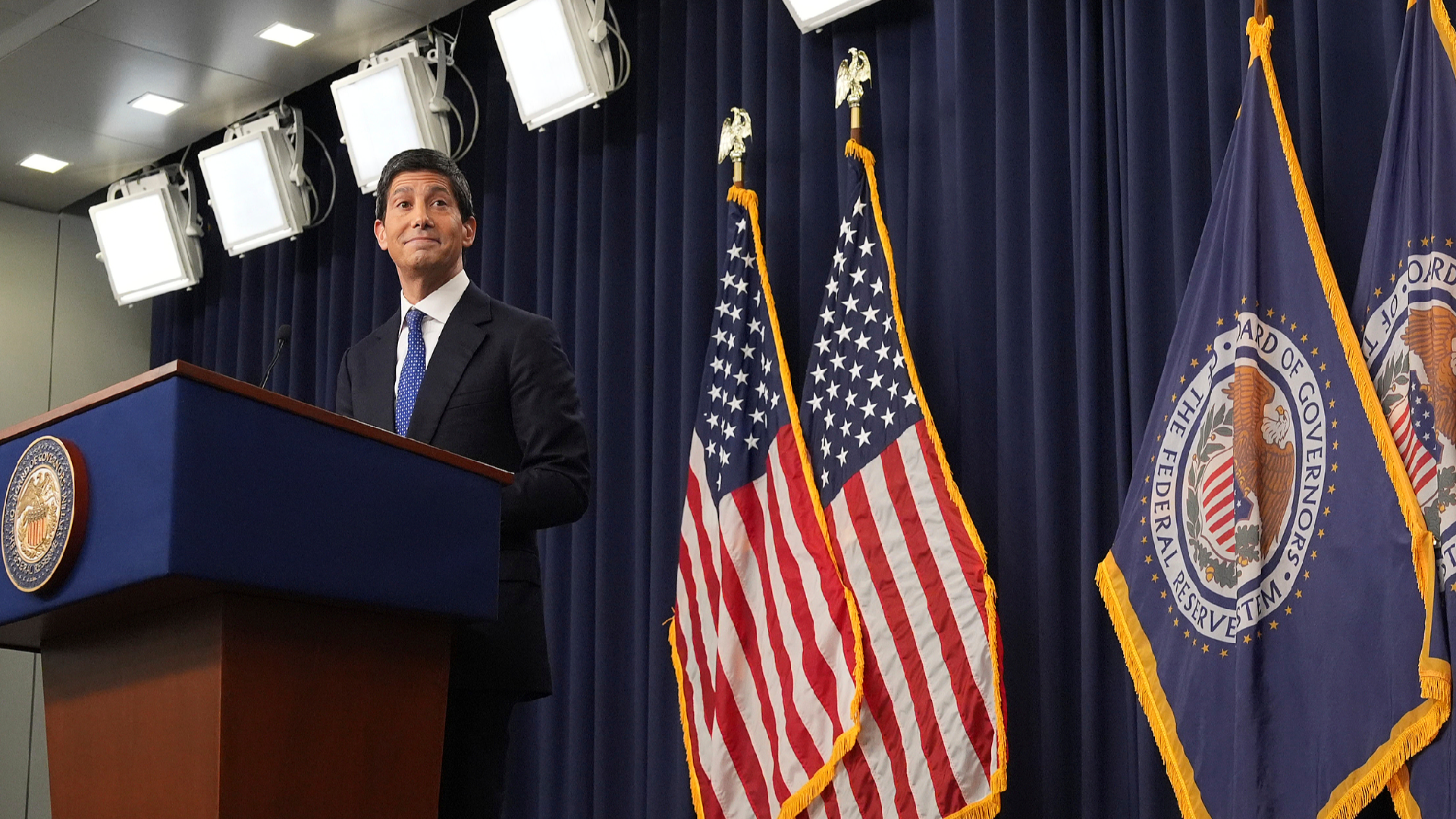
The US Federal Reserve on Wednesday raised interest rates for the first time since 2023, defying US President Donald Trump's demand for cuts, as central bank chief Kevin Warsh stressed the need to combat inflation that has been "too high" for "too long." The Fed's Federal Open Market Committee voted unanimously to raise rates by 25 basis points to between 3.75 and 4 percent. Warsh, appointed by Trump, said the decision was a "serious" one, but needed to be taken. "The plain fact is that inflation is too high, and has been for too long," he told a press conference. Wednesday's rate hike may not be the last – the vast majority of Fed policymakers indicated that at least one more rate hike was likely necessary before the end of the year, according to their Summary of Economic Projections. US households and businesses have been battered by years of higher-than-target inflation, and prices have surged in the wake of Trump's war on Iran, his signature tariff policies and the ongoing AI boom. Trump reacted angrily to the decision, renewing his call for the Fed to lower interest rates "AND FAST" in a social media post. The US president has launched an unprecedented assault on the Fed's independence since taking office, attempting to fire a Fed Governor and launching a criminal probe against Warsh's predecessor in his quest for lower rates to spur economic activity. But asked by reporters on Wednesday whether he had still confidence in Warsh, Trump answered, “Yeah I do.” "I ... talked to Kevin," Trump added. "And I said you might as well vote with the board because it's not going to matter. The board is very hostile. They're very political. They're doing the wrong thing." Trump's Republican Party faces a stern test in upcoming midterm elections, with rival Democrats seeking to wrest control of both houses of Congress and economic issues front-and-centre for voters. The Fed has held rates steady since January, choosing to wait to gauge the effects of the Iran war's energy price shocks and to let the impact of tariffs on prices ripple through the economy. Since July, however, a growing faction of policymakers had indicated a rate hike may be required to tame inflation, as the war grinds on and prices remained elevated. On Friday, August's consumer price index came in at 3.4 percent – unchanged from the month before, but still well above the Fed's long-term two-percent target. Diane Swonk, chief economist at KPMG, said inflation had "forced the Fed's hand." "Price pressures remain too elevated and too persistent for policymakers to look through, while the economy and labour market have held up well enough to absorb tighter policy," she said. In its SEP, the Fed raised its forecast for its preferred gauge of inflation – the Personal Consumption Expenditures (PCE) price index – by 0.1 percentage points to 3.7 percent by year-end. The Fed also raised its projection for GDP growth by year-end to 2.3 percent, up 0.1 percentage points. Warsh reiterated his belief in the "resilience" of the US economy, citing its strength as being a marker of its ability to absorb tighter fiscal conditions. US stock markets largely priced in Wednesday's rate hike, but they were still down on the news – expected with any rate hike as equities become less attractive. Yields on 10-year US Treasury bonds – which have surged in recent days as uncertainty on long-term inflation has spiked – were also up past the five-percent threshold, a sign that uncertainty remains a factor. The Fed has a dual mandate to deliver maximum employment while keeping inflation to its long-term two-percent target. It mainly achieves these goals by setting the key US interest rate – lower rates tend to spur economic activity but fuel inflation, and hiking them cools both activity and prices. (Agencies) Edited by Cecil Wong
He said economic strength and surging capital expenditures have increased the competition for capital
The BBC's Samira Hussain looks at the factors considered in the increase by the Federal Reserve and what it could mean for the US economy.
The BBC goes inside a fortified storage facility to view luxury goods seized by police that are now up for auction.
Inflation has remained stubbornly high
Quarter-point hike is first in 3 years; oil shock, tariffs, AI boom continue to drive inflation
Quarter-point hike is first in 3 years; oil shock, tariffs, AI boom continue to drive inflation
The Fed on Wednesday delivered a much-expected interest rate hike.

